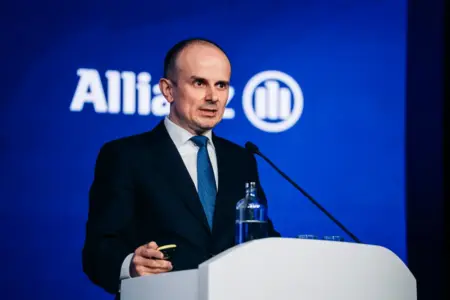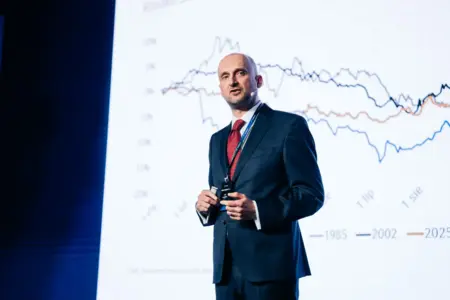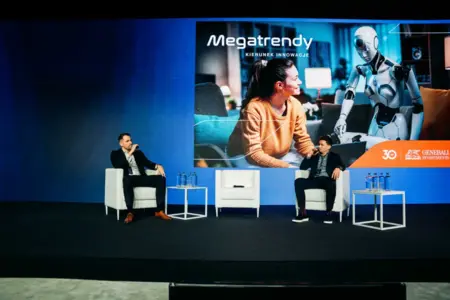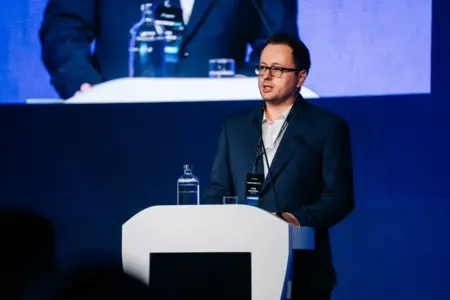
Michał Duniec, Robert Stanilewicz
Mateusz Mucha, Michał Tuczyński, Robert Stanilewicz
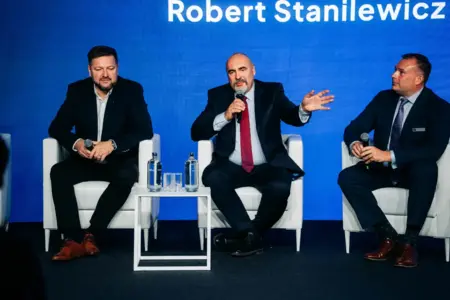
ETFs and traditional mutual funds are often presented as competing investment solutions. In practice, however, they can play different and complementary roles in a portfolio. ETFs generally offer low costs, transparent exposure and easy access to broad markets. Actively managed funds, in turn, can benefit from issuer selection and the active management of credit risk, duration and portfolio liquidity. During the discussion, we will consider which market segments may favour passive solutions and where active management can deliver greater value. We will explain when a mutual fund and an ETF genuinely compete with each other, and when combining them can help create a more efficient portfolio for Polish investors using IKE and IKZE retirement accounts as well as standard brokerage accounts.
Piotr Miliński
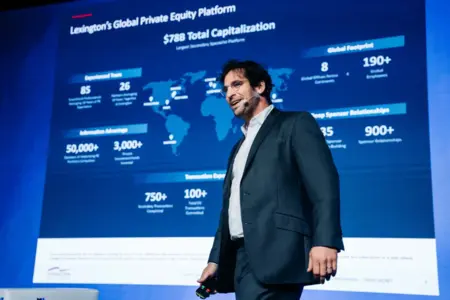
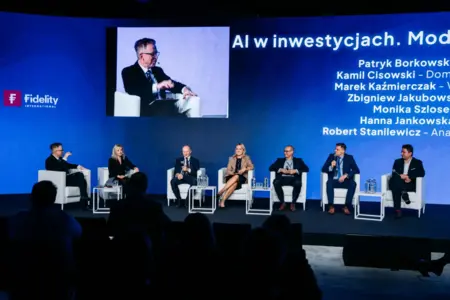
Artificial intelligence is having an increasingly significant impact on the investment process and the way financial institutions operate. During the presentation, we will demonstrate how AI tools are already changing the day-to-day work of analysts and fund managers. We will consider the areas in which technology can improve effectiveness and reduce costs, as well as those where its use may lead to incorrect conclusions or excessive reliance on models. We will also discuss which skills and responsibilities will remain the domain of humans, and whether AI will change only the tools used in asset management or the asset management model itself.
Radosław Sosna
There is no single portfolio that is suitable for every investor throughout their entire life. As financial goals, professional and family circumstances, accumulated capital and investment horizons change, so do liquidity requirements, risk capacity and the way savings should be managed. During the presentation, we will introduce four model portfolios corresponding to different stages of an investor’s financial life—from the beginning of the wealth-building journey, through a period of intensive accumulation, to retirement preparation and the withdrawal of accumulated assets. Using specific examples, we will explain how allocations to equities, bonds and other asset classes may evolve over time, as well as how the role of diversification, rebalancing and solutions such as IKE and IKZE retirement accounts may change.
Małgorzata Barska, Katarzyna Sekścińska, Renata Wanat-Szelenbaum, Michał Duniec
Longer lifespans are changing the logic of financial planning. Capital must last longer, support an active later life and provide sufficient liquidity in times of crisis. New risks are also emerging, including loss of independence, the cost of care and financial pressure from younger generations.
At the same time, longevity creates new opportunities: a longer period of capital accumulation and a genuine prospect of an active retirement.
How should a portfolio be prepared for greater longevity? What role should financial institutions and advisers play? And how can clients be protected from the common financial mistakes associated with the later stages of life?
Anna Bąkała
For many clients, bank deposits and retail government bonds are the first instruments used to invest surplus funds. Expanding a portfolio to include mutual funds, ETFs and other market instruments is often associated with concerns about potential losses, insufficient knowledge and the difficulty of selecting solutions that match the investor’s objectives. During the presentation, we will demonstrate how investors can gradually move from simple savings products and bonds towards a more diversified portfolio. We will explain how to take into account the client’s objectives, investment horizon, liquidity needs, risk capacity and risk tolerance. Using practical examples, we will show how to combine a more stable part of the portfolio with assets offering greater growth potential and higher volatility, how to determine the appropriate allocation between them, and how to reduce the risk of decisions driven by short-term emotions.
Tomasz Korab
High yields, changing interest-rate expectations and the renewed risk of inflation mean that bond investment performance can currently be driven by a wide range of factors. Returns may come from current interest income, falling yields and rising bond prices, credit-risk premiums and—in the case of global strategies—movements in foreign exchange rates. During the presentation, we will identify the most attractive sources of income and growth potential currently available in the fixed-income market. We will compare short-term, government, corporate, long-duration and global strategies, and explain the risks associated with each of them. We will indicate when performance may be driven primarily by the portfolio’s current yield and when achieving the expected return requires exposure to interest-rate, credit or currency risk. We will also demonstrate how these strategies can be matched to the client’s objectives, investment horizon and risk profile.
Zbigniew Wójtowicz
Financial markets constantly tempt investors to do something more: buy, sell, change strategy, react to the latest news or predict the market’s next move. Each time, convincing arguments emerge in favour of acting more quickly, responding more decisively and searching for new solutions. But do we really need to do more and move faster to achieve long-term success?
Szymon Borawski-Reks, Sebastian Buczek, Marcin Ciesielski, Marcin Winnicki, Jagoda Fryc
Following strong gains across many markets, it is becoming increasingly difficult to determine where further upside remains and where optimistic scenarios have already been priced in. Stock market performance in the final months of 2026 and throughout 2027 will be driven primarily by corporate earnings growth, valuation levels, the direction of central-bank policy, bond yields, economic conditions and capital flows between regions and sectors. During the debate, experts will assess whether equity-market gains are supported by sufficiently strong fundamentals to continue, and which regions, sectors and market segments currently offer the most attractive risk-return potential. They will compare the outlook for the Warsaw Stock Exchange with that of the United States, Europe and emerging markets. They will also discuss the principal risks—from elevated valuations and highly concentrated market gains to weaker corporate results, persistently high bond yields and geopolitical tensions.
Piotr Minkina
Crowne Plaza Warsaw The HUB is a luxury hotel that combines modernity with comfort in the heart of Warsaw - it is located just 1 km from the city center.
Learn how to get there Book a hotel room
Crowne Plaza Warsaw The HUB is a luxury hotel that combines modernity with comfort in the heart of Warsaw - it is located just 1 km from the city center.
Learn how to get there Book a hotel room
PKO TFI, established in 1997, is part of the PKO Bank Polski Group and the largest investment fund management company in Poland. The company manages assets worth PLN 88 billion and holds over 22% of the retail investment fund market. Trusted by more than 2.3 million clients, PKO TFI offers over 50 investment funds and savings solutions, including PPK, IKE, IKZE, PPE, and PPO. As the market leader in Employee Capital Plans (PPK), the company holds a 30% market share.

Quercus TFI S.A. is Poland’s first publicly listed investment fund management company, serving affluent individual and institutional investors. Founded in 2008 by former ING Group executives, the company managed PLN 9.6 billion in assets as of the end of June 2026. Its principal shareholders are key employees and Franklin Templeton. The Quercus Group also includes Xelion Investment House, Poland’s largest independent investment fund distributor, with more than PLN 10 billion in assets under administration. In 2025, the Group reported a net profit exceeding PLN 60 million.


ING TFI is one of the largest and longest-established investment fund management companies in Poland, operating on the market since 1997. ING TFI’s mission is to make knowledge and tools more accessible, opening up the world of investing to investors and helping make investing clear and accessible to everyone.
TFI PZU manages assets worth more than PLN 70 billion. It offers a comprehensive range of products for both individual and corporate investors, including top-rated IKE and IKZE investment accounts and numerous award-winning investment funds. The company is a leader in index funds, which are available through the modern inPZU platform. In 2026, TFI PZU entered the Warsaw Stock Exchange market with a new product line comprising ETF funds. A 0% promotional fee applies to the five new strategies until the end of the year.
TFI PZU is also one of the leading providers of employee pension schemes, including PPE occupational pension programmes and PPK Employee Capital Plans.